
Across Asia Pacific, countries continue to navigate demographic pressures, economic uncertainty, climate risks and rapid technological change—all while striving toward Health For All. The demand for timely, country-led and policy-relevant evidence has never been greater.
As we close the year, we are reflecting on three insights that emerged across APO’s publications, webinars and regional health policy and systems research engagements in 2025:
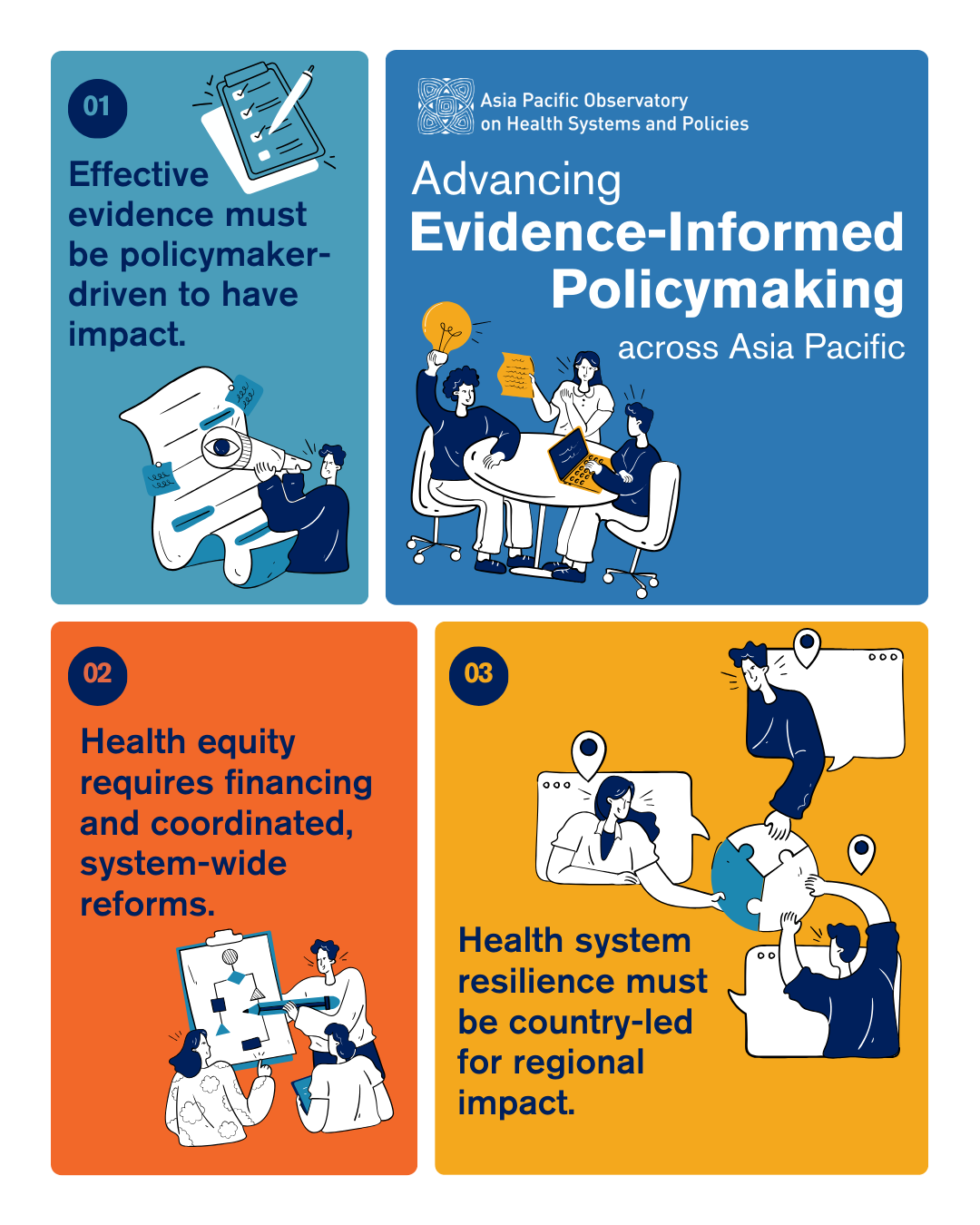
Effective evidence must be policymaker-driven to have impact.
Partners across the region sought evidence that reflects actual system challenges. This was clear during our Health System in Transition (HiT) Review trainings in China, Indonesia and Philippines, where ministries engaged deeply because research aligned with their policy agenda. The Thailand HiT, showed how UHC reforms were anchored in strong stewardship and primary care governance, reinforcing that data must link directly to decision-making.
APO's policy brief mapping 4, 810 PHC journal publications across South, East Asia and the Pacific echoed this. Survey respondents identified community engagement as the most cited research need, followed by community-led studies and implementation research using granular, locally generated data.
 Ministry of Health representatives and academic researchers participating in APO’s Health Systems in Transition Review training in Yogyakarta.
Health equity requires financing and coordinated system-wide reforms.
The PHC landscape policy brief found that equity was one of the least prioritized research outcomes, while nearly half of all PHC studies focused on service delivery and very few examined financing or governance. This leaves countries with limited evidence on who accesses care and why inequities persist.
Our ageing publications underscored similar concerns. Pacific Island Countries face rising multimorbidity, caregiver burden and long-term care needs, alongside gaps in financing and disaggregated data. A comparative country study on public-private coordination found fragmentation to be a major barrier to continuity of care. Equity must therefore be deliberately embedded into system design, financing and governance.
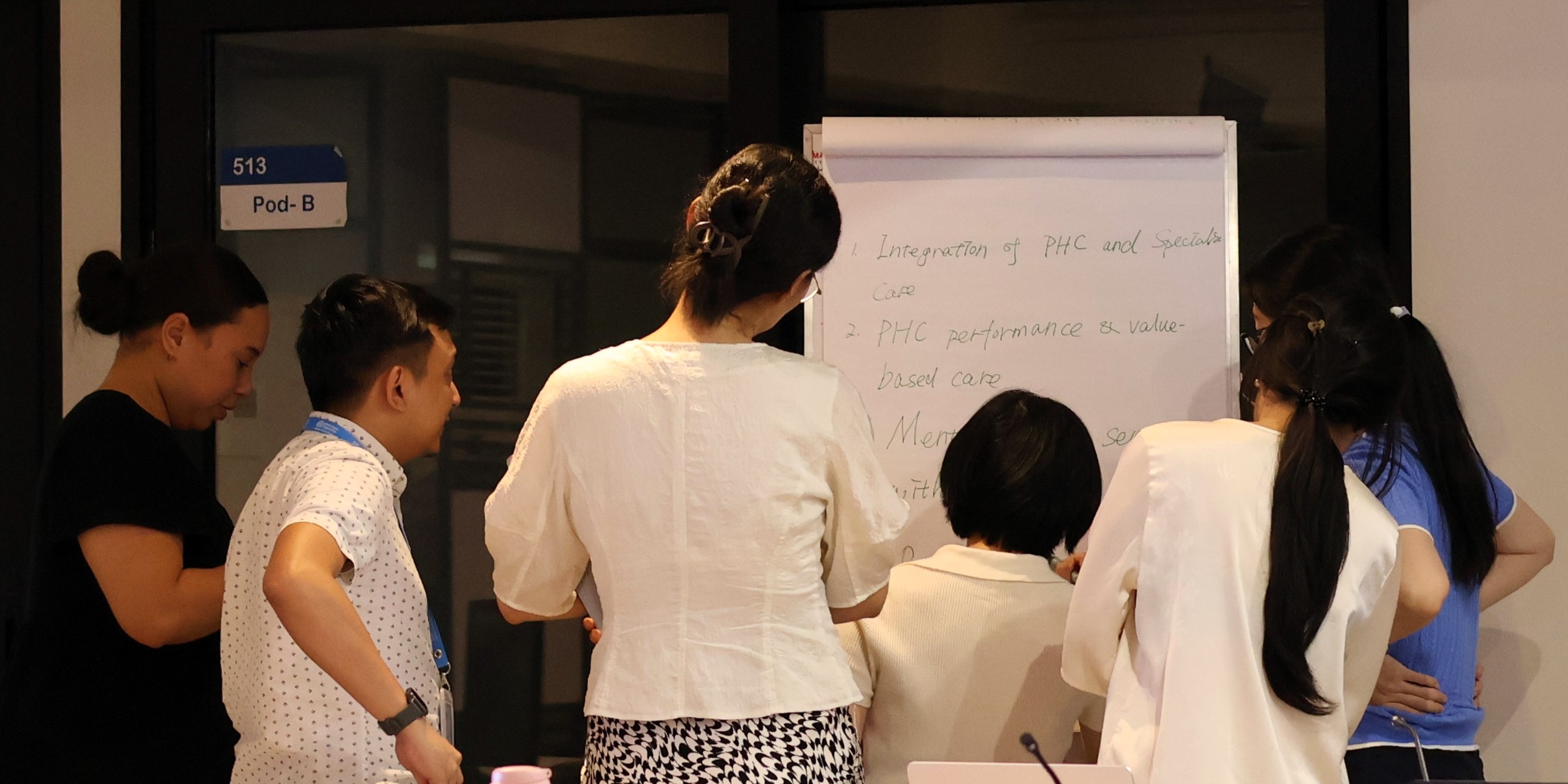 Participants engaging in primary health care research landscape session led by APO at the WHO 2025 Global Health Learning Centre in Manila.
Health system resilience must be country-led for regional impact.
At the Western Pacific Action Forum on Climate-Resilient and Sustainable Health Systems, hosted by WHO ACE, APO facilitated sessions where countries emphasized that climate vulnerabilities differ sharply by context, reinforcing the need for national evidence rather than one-size-fits-all approaches. Persistent gaps in climate-attributable data remain, and APO's climate and health consortia aim to support country-led methodologies that inform planning and financing.
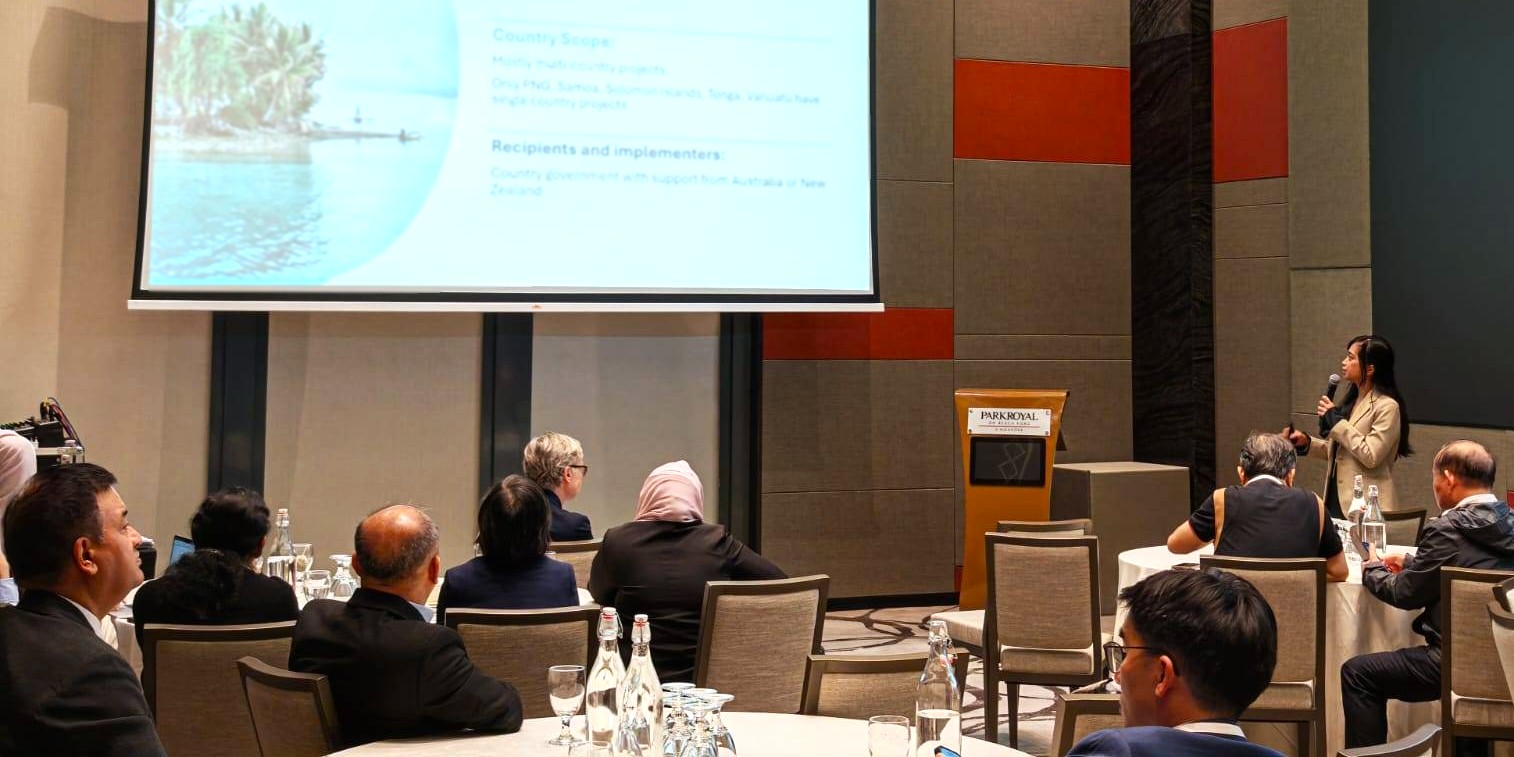 APO facilitating a discussion at the Western Pacific Action Forum on Climate-Resilient and Sustainable Health Systems hosted by WHO ACE in Singapore
Looking ahead, APO will deepen its work on PHC and UHC, health equity, health system resilience for climate change and pandemics, digital health and human resources for health—always grounded in country priorities and regional collaboration.